Pro Tips: How to Keep Your Knives Razor-Sharp
A good quality knife will hold an edge for months if looked after, while cheap, poor-quality steel will dull in weeks—you get what you pay for. Use these rules to protect your investment and maintain that clean edge between professional visits:
- Never, Ever Use the Dishwasher
- Blade Damage: Once the door closes, water pressure causes the blade to knock against other items, ruining or chipping the razor-sharp edge.
- Corrosive Detergents: Dishwasher chemicals over time cause pitting, spotting, rust, and ruin the steel finish.
Handle Ruin: High heat discolours handles and causes classic Bakerlite black handles to crack and turn grey.
- Dry immediately with a tea towel using the same spine-to-edge downward motion.
- The Right Way: Hold the blade under hot running tap water. Hand wash with a soft dishcloth, sponge, or pot scrubber using soapy water, then place it in the drying rack.
- Safety First: Always clean in a downward motion starting from the spine (top edge) and moving past the cutting edge. Never draw a cloth upwards or scrub back and forth along the edge unless you want a trip to the local Accident & Emergency department!
- Don’t Let Them Soak
- Never leave knives submerged in a sink of soapy water. The metal hates it, and micro-corrosion will form tiny chips right on your cutting edge. Also rummaging in the sink for a sharp knife is asking for trouble
- Dry immediately with a tea towel using the same spine-to-edge downward motion.
- Use Them Properly
- Not a Tool Box: A knife is for cutting food. It is not a can opener, screwdriver, hammer, or shellfish opener. Buy those at the hardware store for a fraction of the cost of replacing an expensive knife.
- Avoid Hard Objects: Never hit or chop frozen products, bones, hard seeds, stone fruits, or hard vegetables. Defrost everything completely before cutting, and slide through instead of hacking like a cleaver to prevent major chips.
- Check Your Surface: Only use wooden or plastic chopping boards. Never chop onto stone, glass, or stainless steel.
- The Spine Flip: When scraping food off your chopping board, always flip the knife over and use the top spine. Scraping with the cutting edge dulls it instantly.
- The Locomotive Motion: Cut using a smooth forward or backward slicing motion. Pushing straight down with muscle strain ruins the edge; slicing lets the blade do the work. Straight, even strokes stop the blade from twisting or flexing sideways.
- Smart Storage
- Magnetic Bars & Blocks: Fixing a magnetic holder to the wall is the ultimate way to protect your edges. If you don’t want to mount anything to the wall, bench-standing magnetic knife holders are also available on the market and look quite stylish on the counter.
- In a Drawer: Purchase an inexpensive wooden, silicone, or plastic multi-knife organizer so blades stand on their edges and don’t slam into each other.
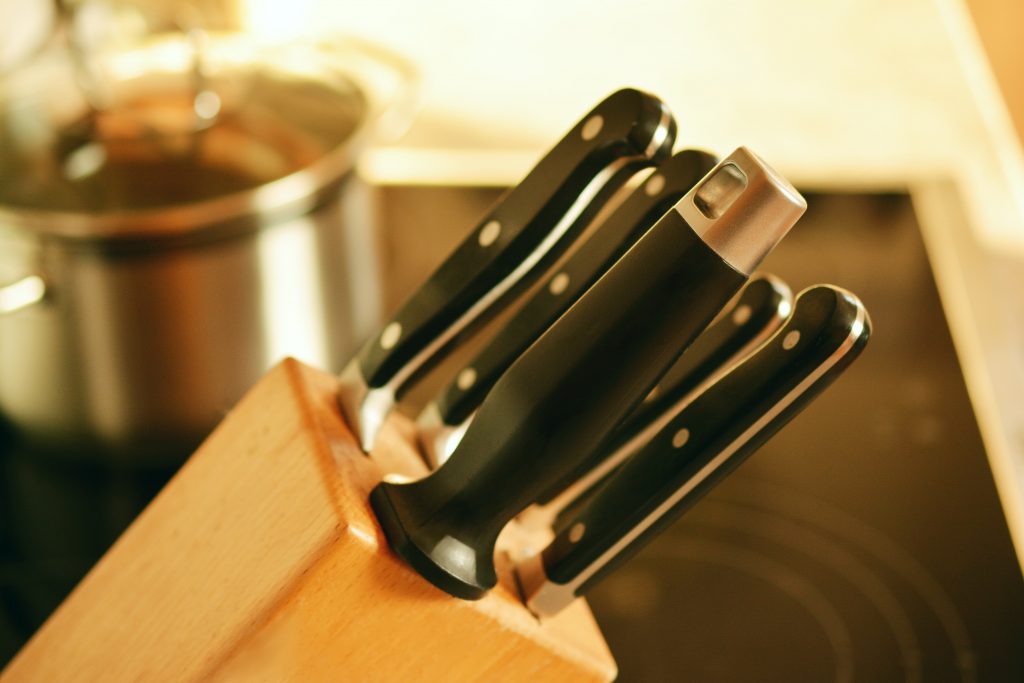
- In a Block: Store your knives upside down in the slots so the sharp edge doesn’t saw into the wood every time you slide it in and out. Traditional knife blocks can now be bought in many different colours, materials, plastic composites and wood—shop around online because some of them look pretty cool!
- Safe Maintenance & Respecting the Edge
- Ditch the Cheap Sharpeners: Do not use handheld pull-through or electric sharpeners. They score the sides of the blade, strip away far too much metal, and drastically shorten the life of your knife.
- The Right Sharpening Steel: After your gear has had the Mister or Mrs Sharp treatment, all you need for periodic maintenance is a standard fine sharpening steel. Steels generally come in fine, medium, and coarse. Fine steels are inexpensive and readily available from everyday retail shops like Briscoes for around $40 to $50. You do not need a fancy diamond, oval, or ceramic steel—those are very expensive and completely unnecessary.
- Is My Steel Worn Out?: On a proper sharpening steel, there are very small, fine ridges running down the full length of the rod. If those ridges have rubbed smooth and completely gone, then yes—it’s time to replace it with a new one.
- The Two-Swipe Rule: When using a steel we call it honing. When honing, you only need two quick swipes per side—not twenty.
- The Tomato Test: If your knife can slice tomatoes, it’s reasonably sharp. If it cannot cleanly slice through a tomato skin, give it the two-swipe hone on your fine steel and try again. If it still fails, it’s time to call Mister or Mrs Sharp.
- Watch Your Fingers: The old saying that “you can’t cut yourself with a sharp knife” is complete rubbish. When your knives return from our workshop, treat them with absolute respect. After being used to blunt gear, it is incredibly easy to nick yourself if you get careless.
- If You Drop It, Let It Go: Never try to catch a falling knife. Jump back out of the way immediately. You do not want a razor-sharp edge landing anywhere near your foot.